
Wondering Warden: Hidden Messages
I’m back for another season! Who could resist the lure of another spring and summer as a Seasonal Warden for the Thames Basin Heaths Partnership? Not me!
What a privilege it is to call this rare and ancient habitat, created and maintained by human activity over thousands of years, my ‘office’. With its austere beauty and rare inhabitants the Thames Basin Special Protection Area really is the most special of places. 80% of the UK’s heathland has already been lost and the remainder is fragmented so I welcome the opportunity to support the land owners and land managers in protecting what we have left, which amounts to approximately 20% of the global lowland heath.
One of the best parts of my role is engaging with the people who visit the heathlands. Every day brings new conversations with school children, dog walkers, families, runners, cyclists and nature lovers. Many people are curious about the wildlife and want to protect this beautiful habitat, and it’s always a pleasure to chat, answer questions, and share a bit of knowledge.
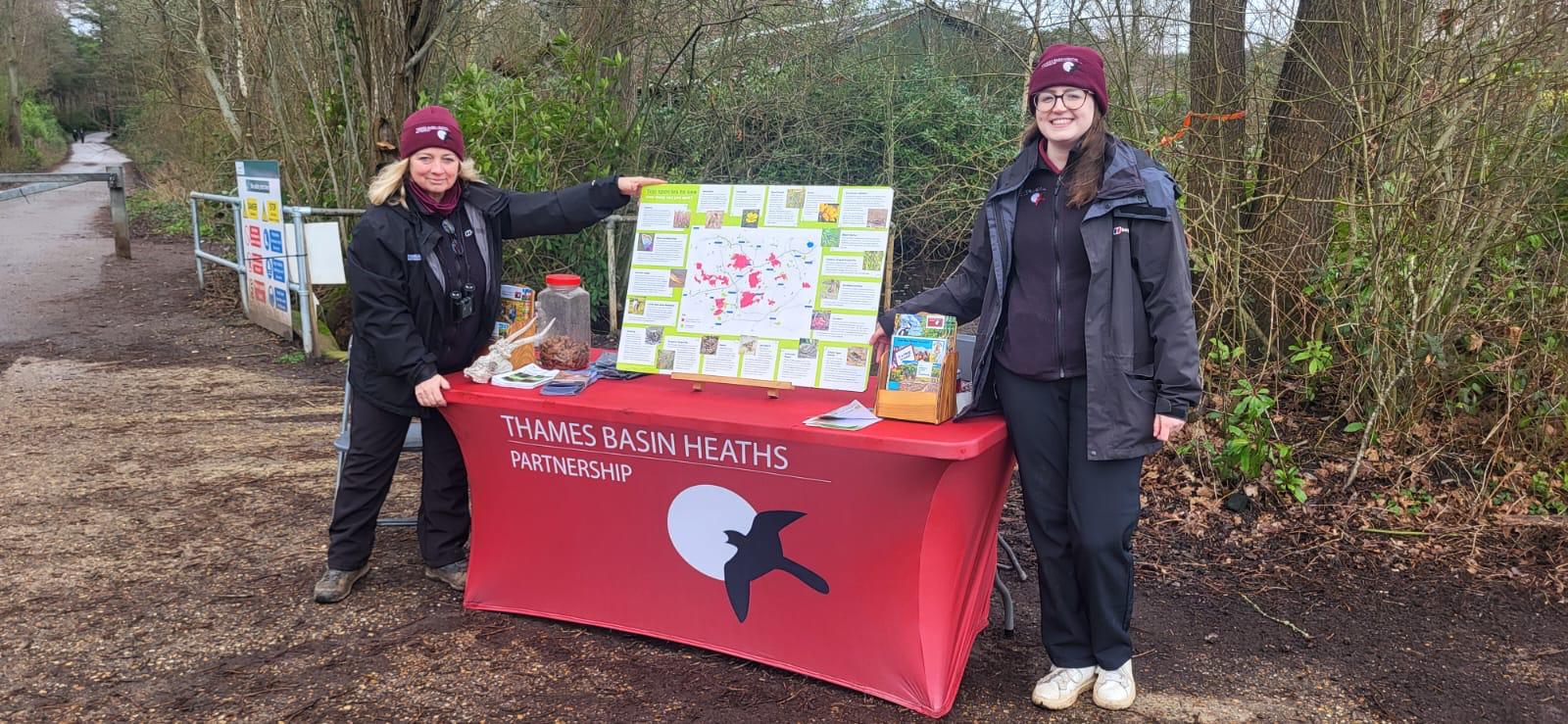
And the job is full of opportunities to expand my knowledge, whether it’s identifying a species I haven’t seen before, learning about conservation management techniques, getting into the nitty gritty of invertebrate ecology (very surprising stuff) or keeping up with the latest ground-nesting bird statistics and trends. No two days are ever the same! It’s great to note that Nightjar, Woodlark and Dartford Warbler numbers are on the increase according to last year’s survey so let’s hope for another good breeding year for these wonderful birds.
On my walk this morning I was lucky enough to catch a quick glimpse of a Dartford Warbler perched on top of the gorse. It was about to go into full song but changed its mind and disappeared. I waited a while but no luck sighting it again so carried on to the wooded edge. This is where I came across a shelf fungus with a secret!
The Artist’s Bracket (Ganoderma applanatum) is a common, perennial bracket fungus found across the UK on dead or dying deciduous trees. It has a woody, shelf-like appearance, and a creamy-white underside. When the underside is scratched it leaves a brown mark, making it possible to draw on it with a stick or your fingernail.
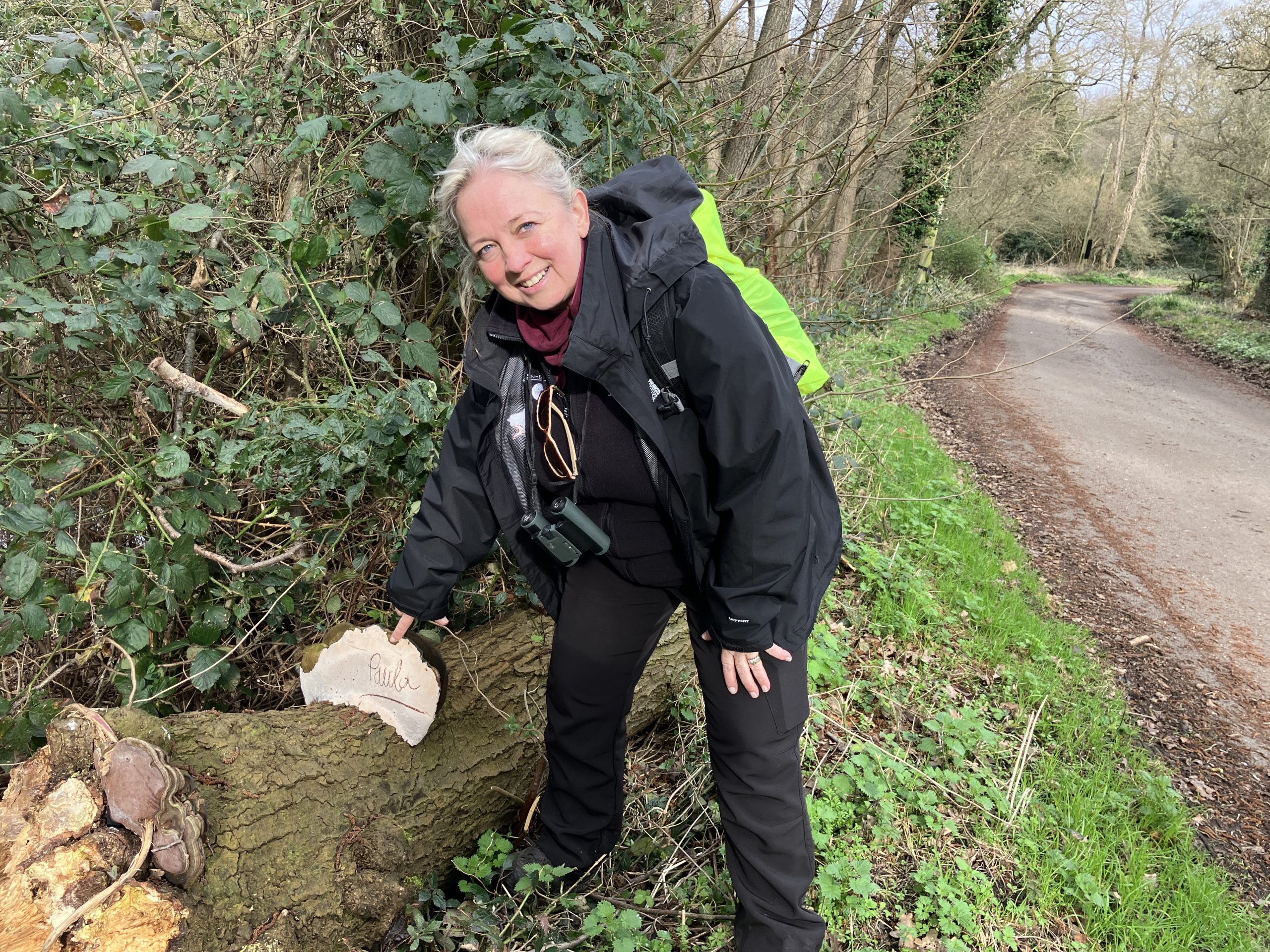
Historically, artists used to create beautiful pictures and when the fungus is cut and left to dry the artwork becomes permanent. However, if you leave the fungus in situ, the drawing or message will disappear after a day or two due to the abundance of spores. This is nature’s disappearing ink trick! What could this be used for? Forbidden lovers? Couples entangled in clandestine affairs could leave terms of endearment for each other or plan for a dalliance in the knowledge that the messages were transient.
Those of a more nefarious nature, on the run from disgruntled traders, could also make use of nature’s magic trick. After tactically splitting up from the rest of the gang, thieves could look for the Artist’s Bracket. The fungus would have been marked by the others in the gang with clues to the secret rendezvous. The ‘risk takers’ were safe in the knowledge that the ‘chasers’ were unlikely to get off their horses to look underneath a fungus so close to the ground. Once the ‘coast was clear’ the spoils of their misdeeds could be divvied up!
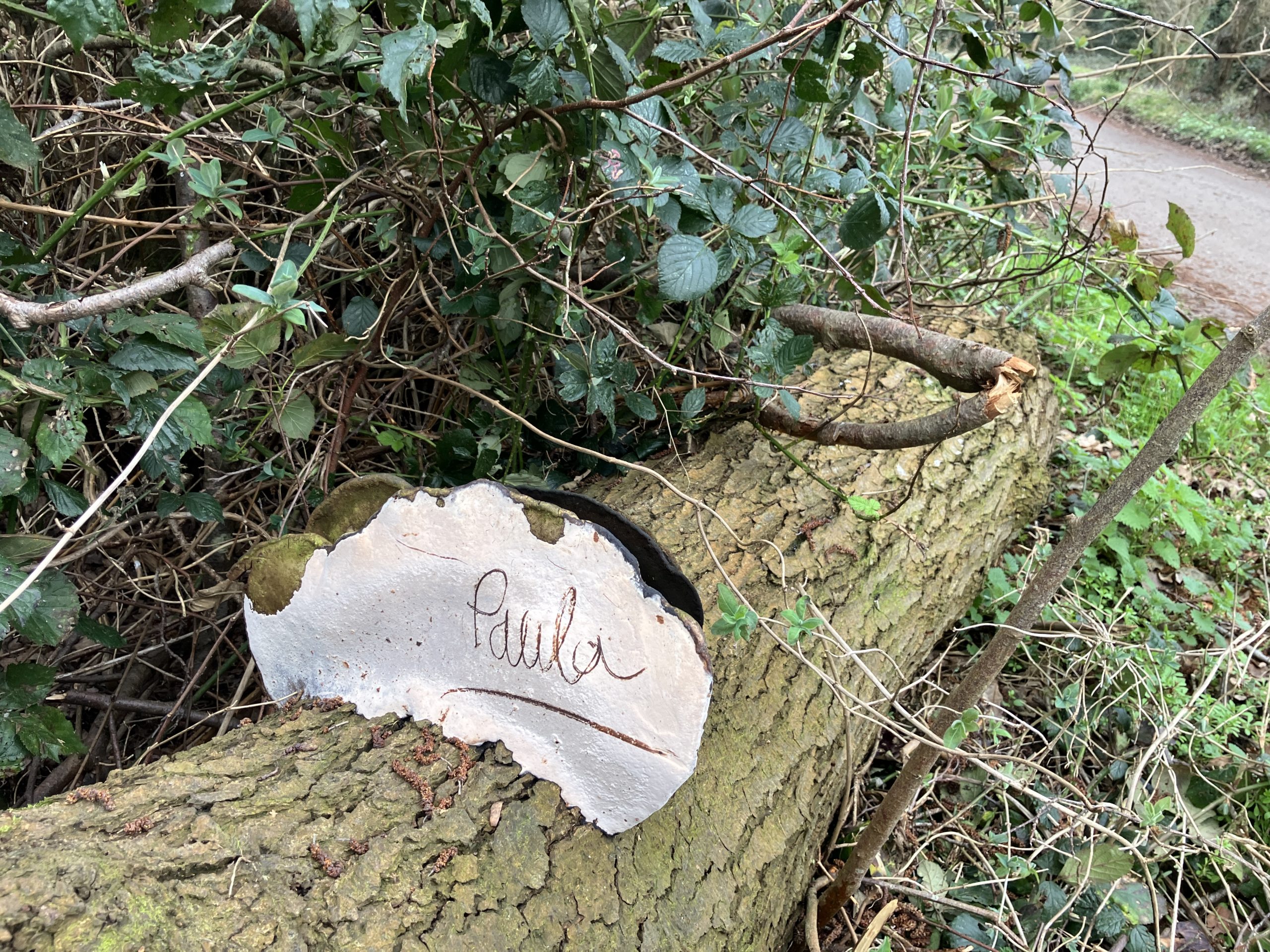
Today, nothing exciting is written on the Artist’s Bracket, just my name! Perhaps a lack of creativity or am I just a happily married law-abiding Thames Basin Heaths Warden?
Warden Paula
Thames Basin Heath Partnership